





Archive for the ‘Outsource Manufacturing’ Category

Firefighting Quality Problems at Contract Manufacturing sites

Inevitably as trust builds over time between  OEMs and contract manufacturers, there are  and can be specific times when it can be  strained. A particular problem may come up in  New Product Introduction (NPI) or during  steady state production which involves some  heavy conversations on both sides to resolve  the problem.

These problems become serious “firefighting” situations when time-to-market is delayed or shipments are being held up to important customers. Critical problems like low yield and critical quality defects are the main culprits in these firefights.

The process for most companies caught up in this whirlwind is to engage R&D, Manufacturing, Quality etc people from both sides in Kaizen or committee settings to rapidly root cause the problem. This would take the form of large meetings and frequently key people would be flown to the problem manufacturing sites.

With a typical North American domestic business trip expense of $1000 (source American Express 2009 Annual Global Travel Forecast) and international trip expense of $3400, these trip costs can quickly add up. This does not even include the daily loaded cost of employees for these firefighting sessions which can be on average $1000/day. A typical issue can easily run into the tens of thousands of dollars in costs for an OEM and contract manufacturer to diagnose, fix and verify.

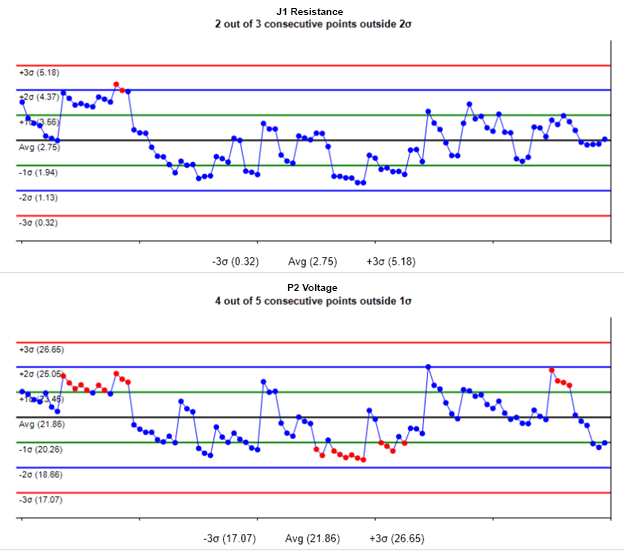
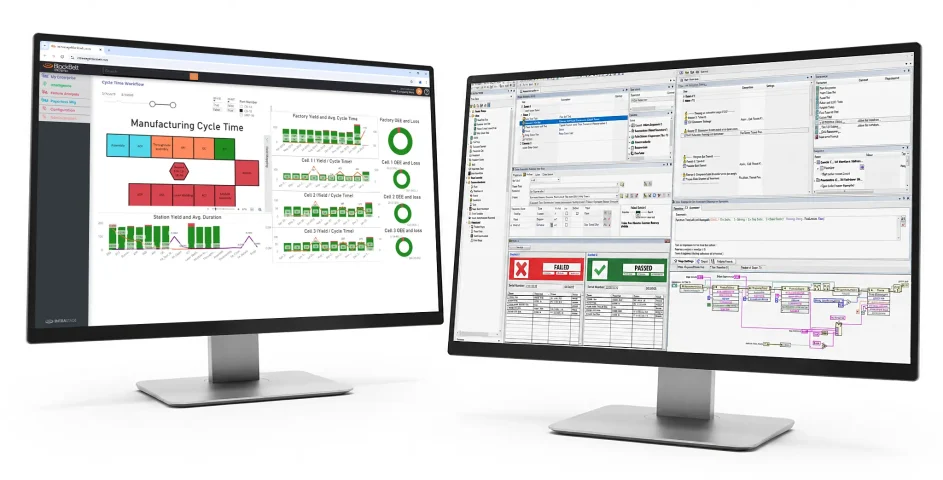
I suggest that increased visibility of key product data such as yields, test runs etc can significantly reduce the cost of this resolution process. Providing access to this information would engage the right persons, at the right time (typically teams are engaged across different time zones) and allow for better collaboration across the sites eliminating travel.

What is your experience as an OEM or CM in firefighting problems? How often do they occur? What are your typical costs associated with such an incident?

Harsh Wanigaratne, IntraStage

Stephen Covey on Trust

The supply chain is getting deeper and more sophisticated for electronics OEM’s, but I’m not sure that the transparency is improving in either direction.  Most OEM’s are still unwilling to truly share roadmaps and plans with outsourced partners, due to concerns that vendors might use the information “against them”.  Most companies still don’t trust outsourced vendors the way they trust internal employees, which is ironic since these vendor-customer relationships tend to last over five years while the average employee retention is less than four.

Outsourced vendors are often afraid to be transparent – whether it is about their part quality, about their profit margins, about their capacity, or about their own roadmap.  Contract manufacturers, for instance, have often been treated as an easily replaced commodity, which has led them to focus on low prices – often with hidden or unintended sacrifices in quality.  From a CM perspective, what the OEM’s want is impossible – the lowest prices and full transparency with perfect quality.  Although OEM’s say that they want everything, most vendors believe that price is paramount.  Due to the pricing pressures, there are often bad business decisions made which impact quality, lead times, or communication.

As Edward Marshall said, “Speed happens when people…truly trust each other.”  And the electronics industry is all about time to market and deeper supply chains.  Those companies who figure out how to trust their suppliers (and vice versa) will have a competitive advantage.  Tom Peters, well-known business consultant, put it best when he said that “Trust is the issue of the decade.”

But trust, like quality, can be hard to quantify.  As such, it can be difficult to make financial decisions around trust and quality.  For example, one CM has bid a price of $100 per unit, but they have had quality issues, and we’re not sure how much we trust them.  The other firm, that we trust to deliver high quality on-time, has a price of $150 per unit.  Who should we pick?  How do we quantify the “trust premium” and the “quality premium”?  Stephen Covey, in his book “The Speed of Trust”, tries to answer this question in detail.  But he starts with a bottom-line, quantifiable formula involving trust:

When trust goes down, execution is slower and cost goes up.
When trust goes up, execution is faster and cost goes down.

I believe software technology can only solve some of the issues.  Technology can’t solve the problem of getting OEM’s and CM’s to agree to a transparency mindset.  Once they have that mindset, though, software technology can enable them to communicate faster, with more transparency, letting them find quality issues sooner and solve them faster.

Sincerely,
Patrick Kelly, CEO IntraStage

Has the Quality Paradigm Shift begun?

Welcome to the IntraStage Blog!

Data, data, data…it exists everywhere, somewhere, lurking, hiding in our organization and making it hard for us to get at it and make the right decisions on problems we face everyday. We also know its a fool’s errand to hope to get all the data and make the perfect decision.

The ”data”  I am referring to here is..”test data” or more accurately data that is generated by your products as you test them through R&D, manufacturing and into the field.  My hope in this blog is to have a conversation on how to inch towards that “perfect decision” and ultimately ship superior quality products, faster and cheaper.

Where do we start? Lets start with Cisco Systems, one of the Most Admired companies on the planet, who just launched a software backbone to control product quality in April 2010.  I would like to think it is coincidental that we launch this blog at the same time, but maybe they just realized the crushing weight of not having this quality data is doing to their business.

I think its a great way to start the topic on how to really get a handle on product quality from Outsourced and Contract Manufacturing….

Cisco Real Time Quality

Sincerely,

Harsh Wanigaratne,
VP Marketing, IntraStage